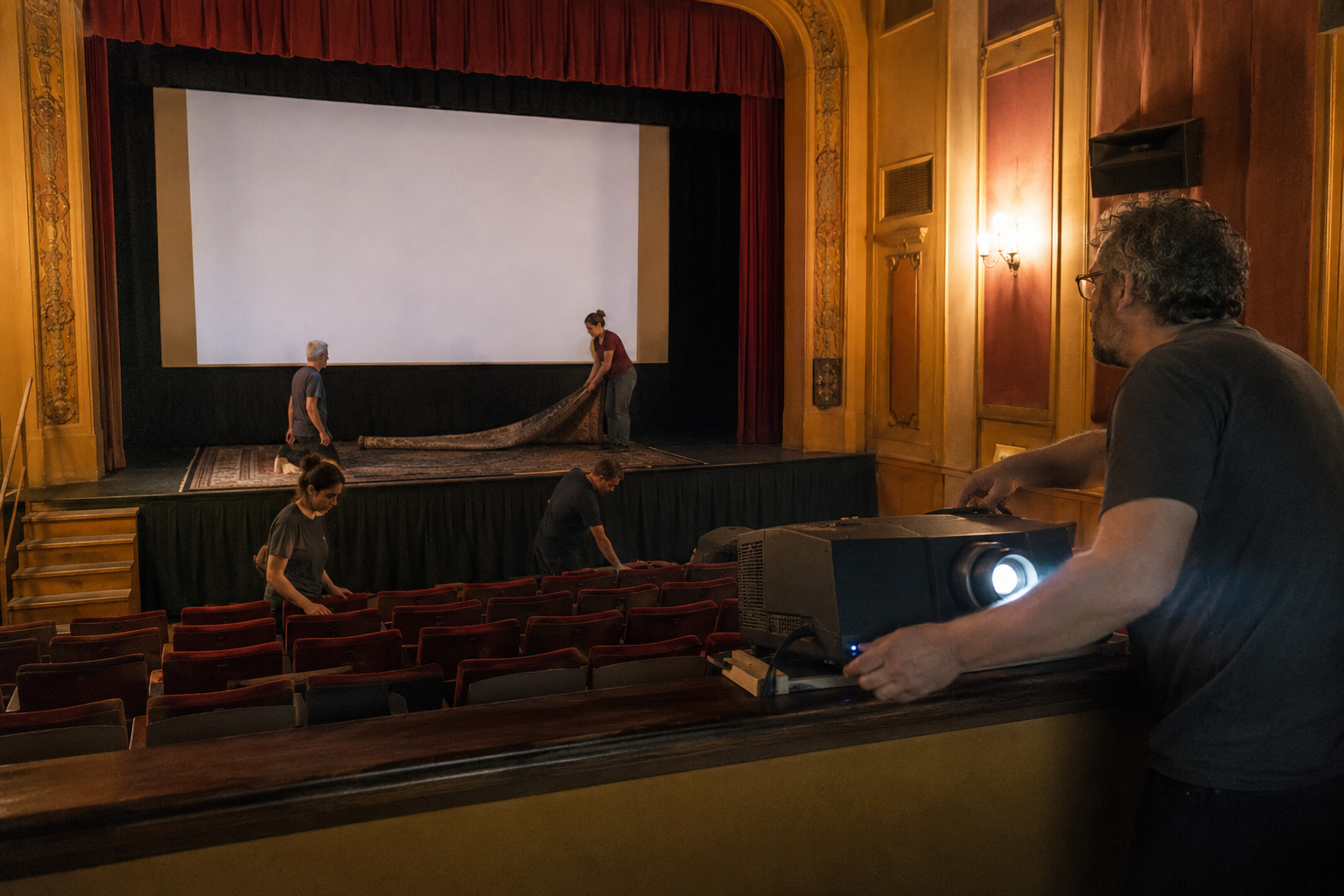

Community cinemas are returning in town halls, libraries, restored theaters, and multipurpose arts spaces. They cannot match the scale of large commercial chains, but they offer something different: a program shaped for local audiences, affordable gathering space, and the chance to discuss a film with neighbors rather than leaving immediately after the credits.
Many projects begin with volunteers and borrowed equipment. Sustainable operations require more structure. Organizers need public performance rights, suitable projection and sound, accessible seating, insurance, trained staff, and a realistic schedule. Starting with one dependable screening each month is often stronger than announcing a weekly program that cannot be maintained.
Programming gives a community cinema its identity. A balanced calendar can include new independent releases, classics, family events, local shorts, and films connected to community history. Audience suggestions are useful, but curators also introduce work people may not already know. Clear content information helps viewers make informed choices.
Partnerships reduce costs and deepen relevance. Schools can support youth screenings, local historians can introduce archive films, and restaurants may coordinate simple evening offers. Filmmakers and critics can join discussions in person or remotely. These relationships work best when each partner contributes something specific rather than appearing only as a logo.
Accessibility must be planned from the start. Step-free routes, hearing support, captions, relaxed screenings, clear travel information, and affordable tickets broaden participation. A venue should explain its limitations honestly. Even when an old building cannot be changed immediately, alternative seating, staff assistance, and selected events in accessible spaces can improve inclusion.
Technology has become less expensive, but quality still matters. A dim image, poor sound, or unreliable stream can make a thoughtful program feel careless. Regular equipment checks, backup cables, spare media, and a technician who understands the room prevent many failures. Volunteers also need simple written procedures.
Community cinemas face familiar pressures: limited funding, volunteer fatigue, competition for venues, and licensing costs. Memberships, small grants, local sponsorship, and refreshments can diversify income. Transparent budgets help supporters understand why tickets cannot always be free and why skilled technical or programming work deserves payment.
Success is visible in repeated attendance and a wider mix of participants, not only a sold-out opening night. When a cinema listens, experiments, and keeps its promises, it becomes part of local cultural infrastructure. The screen is important, but the lasting achievement is a reliable place where people encounter stories together.
The next stage will depend on consistent public reporting and patient evaluation. Organizers should publish practical results, acknowledge limitations, and invite feedback from the people who use the service. That approach makes it easier to improve promising work without allowing early enthusiasm to replace evidence, maintenance, or long-term responsibility.