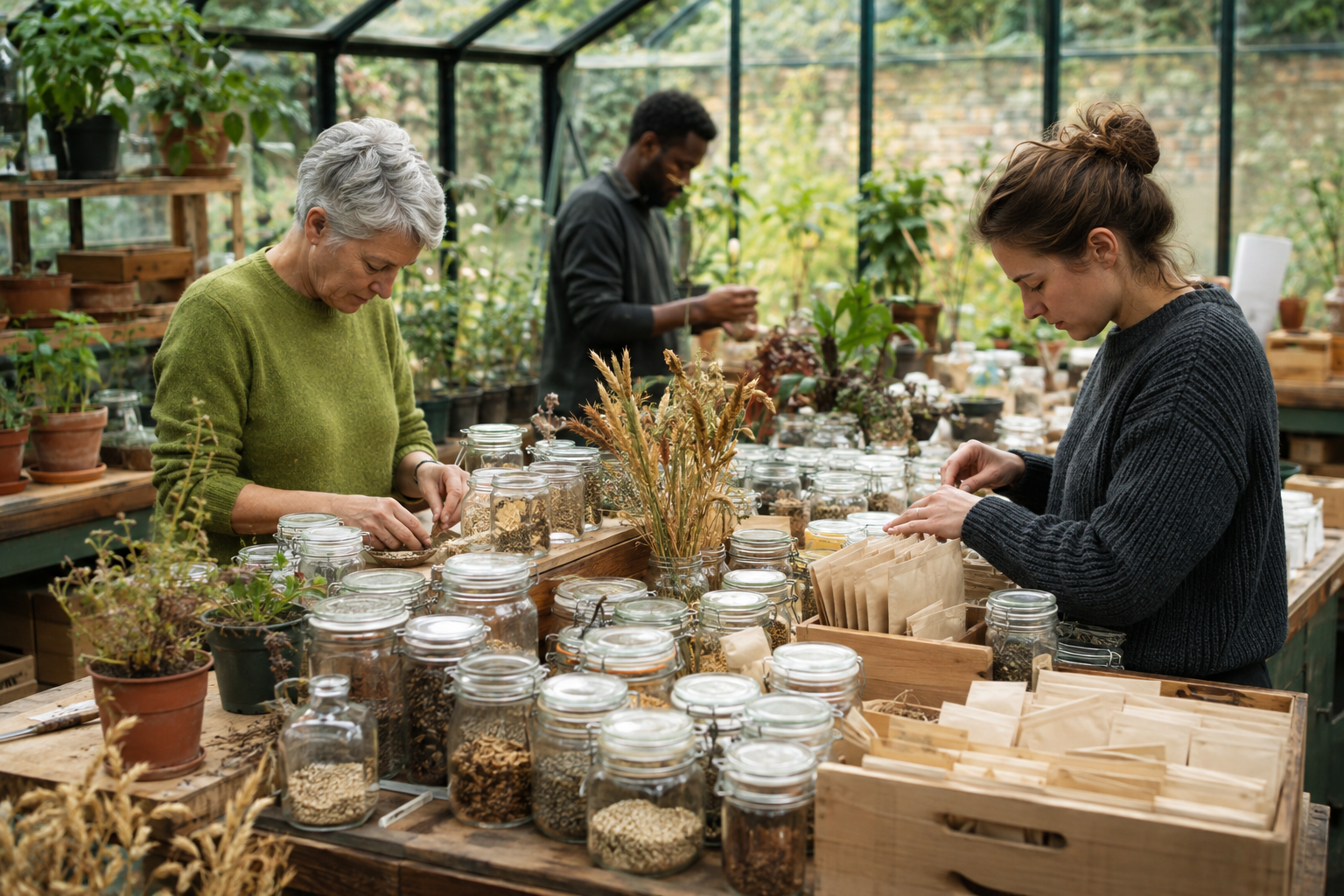

Urban seed banks are preserving locally adapted vegetables, flowers, grains, and wild plants in community centers, libraries, schools, and botanical gardens. Unlike a simple seed swap, a well-managed bank records where material came from, how it was grown, and when it should be regenerated. That information turns jars and packets into a living resource.
Local varieties can carry traits shaped by climate, soil, pests, and cultural preferences. Some produce unusual flavors or mature at times useful to neighborhood growers. Preserving them does not reject modern plant breeding. It keeps more options available for gardeners, researchers, and future adaptation.
Seeds differ in how long they remain viable. Dry, cool, stable storage works for many species, while others lose germination quickly or cannot be stored conventionally. Coordinators monitor temperature and moisture, label batches clearly, and run periodic germination tests. Weak stocks must be grown out before too many seeds fail.
Regeneration requires careful planning. Plants may cross-pollinate with nearby varieties, and a crop grown from too few individuals can lose genetic diversity. Experienced growers use isolation distances, timing, hand pollination, or protective cages. They also record unusual weather and select healthy seed without narrowing the population unnecessarily.
Community participation brings knowledge that laboratory records may miss. Elder gardeners can explain culinary uses, migration histories, and names in different languages. Consent and credit are important when documenting those stories. Banks should avoid commercializing culturally significant material or presenting shared heritage as an institutional discovery.
Distribution policies need balance. Free or low-cost packets encourage growing, but rare stock cannot be handed out without a plan for return. Some programs ask experienced members to multiply seed and provide a portion back. Others maintain separate educational collections so core conservation batches remain secure.
Urban seed banks also teach practical biology. Students can compare germination rates, map flowering time, observe pollinators, and learn why accurate labels matter. Partnerships with universities and public gardens can improve protocols, while community leadership keeps priorities connected to local food and green-space needs.
A seed bank is successful when its collections continue to grow, reproduce, and circulate responsibly. Storage alone is not enough. Regular testing, documented cultivation, diverse growers, and respect for the people connected to each variety transform a cabinet of packets into long-term protection for plant diversity.
The next stage will depend on consistent public reporting and patient evaluation. Organizers should publish practical results, acknowledge limitations, and invite feedback from the people who use the service. That approach makes it easier to improve promising work without allowing early enthusiasm to replace evidence, maintenance, or long-term responsibility.