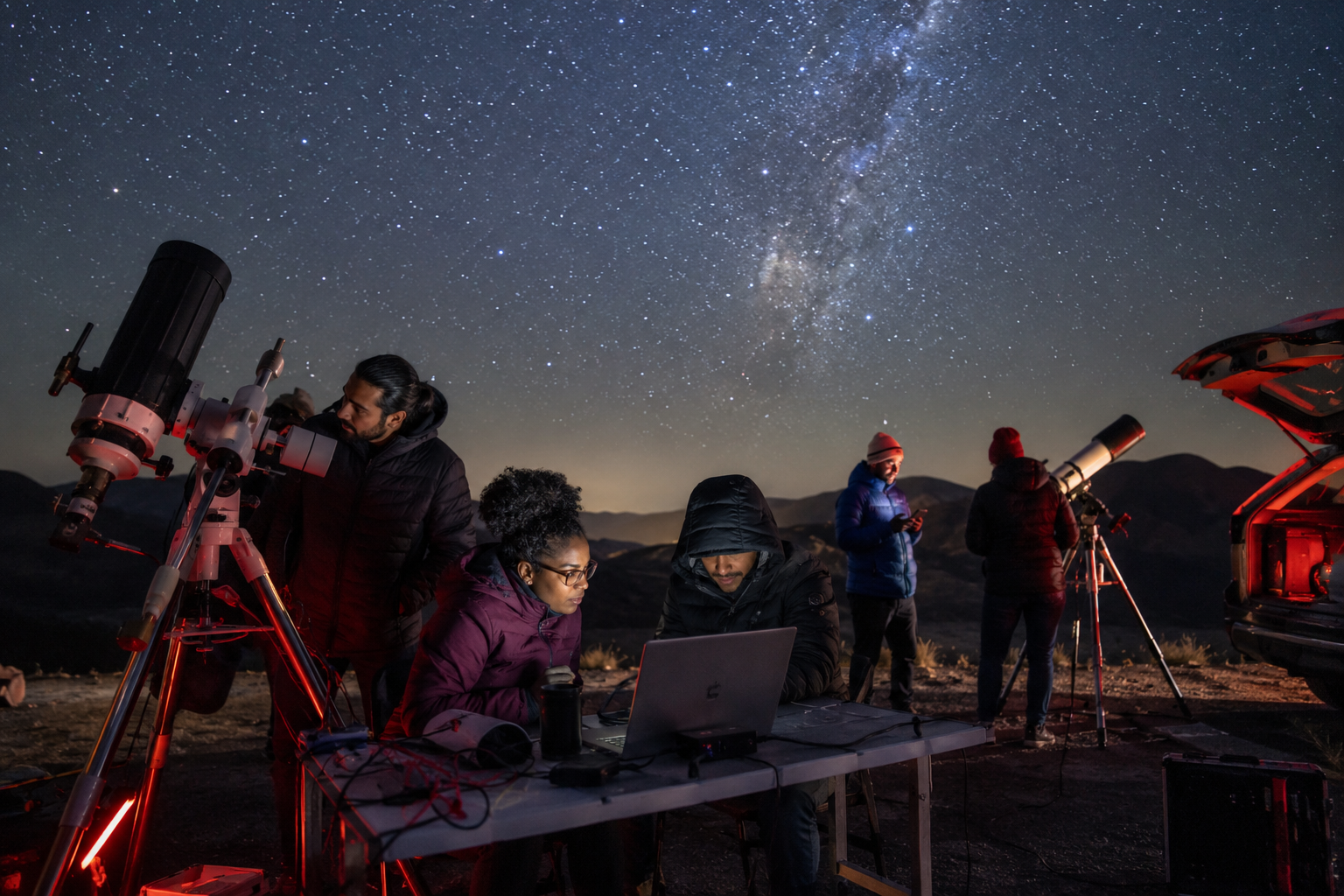

Citizen astronomy networks are connecting amateur observers, schools, and professional researchers across large regions. Participants use backyard telescopes, cameras, weather sensors, and online platforms to record events that no single observatory could watch continuously. Their observations can support research on variable stars, asteroids, meteors, eclipses, and changes in the brightness of the night sky.
The scientific value comes from coverage and repetition. Professional telescopes are powerful but heavily scheduled. A network of smaller instruments can follow an object for many nights or respond quickly when an alert appears. Observers at different longitudes continue a time series after daylight reaches another location.
Training turns enthusiasm into dependable data. Projects provide instructions for timing, calibration, image formats, location accuracy, and weather notes. Participants learn to take dark and flat reference frames, avoid saturating bright targets, and record unsuccessful attempts. A missing observation with a clear explanation is more useful than an unexplained gap.
Online tools coordinate targets and combine submissions. Automated checks can flag impossible values, duplicated files, or images affected by clouds. Human reviewers remain important because unusual results may be either a valuable discovery or an equipment problem. Constructive feedback keeps volunteers engaged while improving future observations.
Access does not have to require expensive equipment. Some projects analyze open telescope images, classify galaxies, monitor radio signals with simple receivers, or measure sky brightness using approved phone methods. Libraries and schools can lend equipment, and remote observatories can schedule shared sessions for groups without dark local skies.
Ethical and practical safeguards matter. Observation sites need safe travel plans, respect for private land, and awareness of wildlife. Images should not expose precise home locations without consent. Projects must credit contributors, explain how data will be used, and avoid overstating a preliminary finding before professional verification.
Light pollution is becoming a major area of collaboration. Repeated measurements show how new lighting, seasonal changes, smoke, or development affect the visible sky. Communities can use the evidence to improve fixture direction and timing while maintaining safety, although local results require careful interpretation.
Citizen networks succeed when they treat volunteers as research partners rather than free labor. Clear questions, open methods, prompt feedback, and public results build trust. The combination of many observers and professional analysis cannot replace major observatories, but it adds a responsive layer of evidence that expands what night sky research can see.
The next stage will depend on consistent public reporting and patient evaluation. Organizers should publish practical results, acknowledge limitations, and invite feedback from the people who use the service. That approach makes it easier to improve promising work without allowing early enthusiasm to replace evidence, maintenance, or long-term responsibility.